What is Depth of Field?
Depth of field in photography refers to how much of the area in an image appears to be in sharp or acceptable focus. The area of acceptable focus would include the exact focus point of the camera lens as well as areas behind and in front of that point.
Depth of field in an image will usually be described as deep or shallow. (Deep depth of field may also be referred to as broad or wide depth of field.) Take a look at image #1. Everything in the entire image appears to be in focus. This is an example of deep depth of field.
Depth of field in an image will usually be described as deep or shallow. (Deep depth of field may also be referred to as broad or wide depth of field.) Take a look at image #1. Everything in the entire image appears to be in focus. This is an example of deep depth of field.
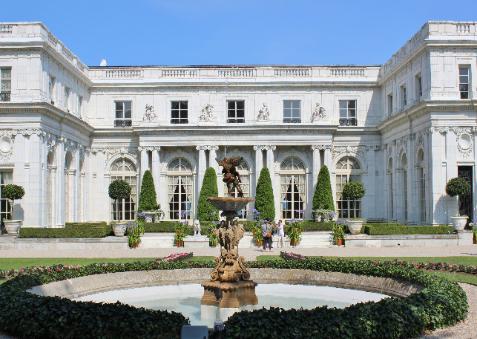
Image #1, Deep Depth of Field
|

Image#2, Shallow Depth of Field
|
Next take a look at image #2. The flags in the front part of the picture are in focus but the ones behind them are very much out of focus. Image #2 is an example of shallow depth of field.
In many images or prints, the decrease in sharp focus from the exact focusing point to the areas in front of or behind it may be so slight or gradual that it cannot be detected by our eyes from a normal viewing distance.
However, if you were to enlarge those same images and view them very closely, you would probably see that the focus is not razor sharp in every part of the image.That is why you will find terms like "acceptable or apparent" sharpness in many definitions of depth of field.
What affects the Depth of Field in an Image? There are several factors that can influence the depth of field in an image. Those factors include the camera lens aperture opening, the camera lens to subject distance, as well as the focal length of the camera lens that is being used.
All three of those things can individually affect the depth of field, but ultimately, the depth of field in a picture is determined by various combinations of all three.
The type of camera that is used and its camera lens/image sensor size combination will also affect the depth of field in an image. The reasons can get a little technical but for now, just keep in mind that it is easier to create shallow depth of field with a Digital Slr camera than with a compact camera.
The Camera Lens Aperture: The aperture is part of the camera lens. It is an opening that can be made larger or smaller to allow more, or less of the light coming through the lens to reach the camera's image sensor. The various sizes of the lens aperture opening are known as F Stops.
Smaller aperture openings (F Stops) like F11 or F16 tend to produce deeper or wider depth of field in an image. Larger lens aperture openings like F4.5 or F2.8 can help to produce shallow depth of field in an image. Take a look at the examples below.
In many images or prints, the decrease in sharp focus from the exact focusing point to the areas in front of or behind it may be so slight or gradual that it cannot be detected by our eyes from a normal viewing distance.
However, if you were to enlarge those same images and view them very closely, you would probably see that the focus is not razor sharp in every part of the image.That is why you will find terms like "acceptable or apparent" sharpness in many definitions of depth of field.
What affects the Depth of Field in an Image? There are several factors that can influence the depth of field in an image. Those factors include the camera lens aperture opening, the camera lens to subject distance, as well as the focal length of the camera lens that is being used.
All three of those things can individually affect the depth of field, but ultimately, the depth of field in a picture is determined by various combinations of all three.
The type of camera that is used and its camera lens/image sensor size combination will also affect the depth of field in an image. The reasons can get a little technical but for now, just keep in mind that it is easier to create shallow depth of field with a Digital Slr camera than with a compact camera.
The Camera Lens Aperture: The aperture is part of the camera lens. It is an opening that can be made larger or smaller to allow more, or less of the light coming through the lens to reach the camera's image sensor. The various sizes of the lens aperture opening are known as F Stops.
Smaller aperture openings (F Stops) like F11 or F16 tend to produce deeper or wider depth of field in an image. Larger lens aperture openings like F4.5 or F2.8 can help to produce shallow depth of field in an image. Take a look at the examples below.

Image #3, Somewhat Deep Depth of Field
|

Image #4, Somewhat Shallow Depth of Field
|
The depth of field in image #3 is somewhat deep. As you can see, the bottles in image #3 are in sharp focus and the background would be considered to be in acceptable focus by most people. In image #4, the bottles are in focus but the background is out of focus. The depth of field in image #4 would be called fairly shallow.
The only thing that was changed from one picture to the next was the F Stop. The F Stop used in image #3 was F16. The F Stop was changed to F4.5 for image #4. Those two pictures are very basic examples of how the depth of field can be changed by simply by using a different F Stop.
Creating pictures with extremely shallow depth of field has the effect of highlighting the subject while blurring the background to minimize distractions in the picture. That is why many photographers like to create shallow depth of field in their pictures when they are taking portrait shots.
In order to control the aperture settings you will need a camera that has a semi-automatic mode such as aperture priority, or a full manual mode.
If you are using a basic camera with all automatic features, you won't be able to manually control the aperture settings. However, even a basic camera will have shooting modes which may help to create deep or shallow depth of field.
For instance, setting a camera to the portrait mode will cause the camera to set a larger aperture for shallower depth of field. Using the landscape mode will indicate to the camera that a smaller aperture opening should be set for wider depth of field.
If you would like to read a little more about the camera lens aperture and its functions, please read, The Camera Aperture.
The Camera Lens to Subject Distance: In addition to the camera aperture setting, the distance from the camera lens to the subject affects the appearance of the depth of field in an image.
As the distance between the camera lens and the subject is increased, the depth of field will become deeper. One of the reasons that landscape or city skyline images always seem to have deep depth of field is because the photographer must be a considerable distance from the subject in order to capture the entire scene.
On the other hand, when the camera lens is close to the subject, the depth of field may appear shallower.The degree of shallowness will depend in part, on how close the camera lens is to the subject. Generally, a short lens to subject distance of 3 feet will create more shallow depth of field than a lens to subject distance of 15 feet. (that is if the same lens and F stop is used)
Another thing to keep in mind if you are trying to create shallow depth of field is to put some distance between the subject and the background or background objects. For instance, if you take a picture of someone standing directly in front of, or beside a tree, that person as well as the tree will be pretty much in focus.
Move the person further away (forward) from the tree and the depth of field around the tree area will begin to become more shallow.
Don't forget that depth of field is controlled by a combination of factors. The lens to subject distance will affect the appearance of depth of field in your image but the F stop that is used will also make a difference.
Moving closer to your subject while using a large aperture opening, such as F4 or 3.5, is a good way to intentionally create shallow depth of field in an image. The depth of field in image #4 was shallow because the camera lens to subject distance was less than 3 feet and the aperture was set to F 3.5.
Depth of Field and Lens Focal Lengths: Short focal lengths (wider angles) will contribute to producing images with the appearance of deeper depth of field than longer focal lengths (telephoto). Technically, the depth of field produced by both types of lenses is similar. That is if the F Stop and the lens to subject distance is the same.
However, it is easier to produce images with the appearance of very shallow depth of field when a long focal length is used. Take a look at image #5. It was taken using a somewhat long focal length of 180mm and the aperture was set to F 5.6. There is no doubt that the depth of field is very shallow in this image.
The only thing that was changed from one picture to the next was the F Stop. The F Stop used in image #3 was F16. The F Stop was changed to F4.5 for image #4. Those two pictures are very basic examples of how the depth of field can be changed by simply by using a different F Stop.
Creating pictures with extremely shallow depth of field has the effect of highlighting the subject while blurring the background to minimize distractions in the picture. That is why many photographers like to create shallow depth of field in their pictures when they are taking portrait shots.
In order to control the aperture settings you will need a camera that has a semi-automatic mode such as aperture priority, or a full manual mode.
If you are using a basic camera with all automatic features, you won't be able to manually control the aperture settings. However, even a basic camera will have shooting modes which may help to create deep or shallow depth of field.
For instance, setting a camera to the portrait mode will cause the camera to set a larger aperture for shallower depth of field. Using the landscape mode will indicate to the camera that a smaller aperture opening should be set for wider depth of field.
If you would like to read a little more about the camera lens aperture and its functions, please read, The Camera Aperture.
The Camera Lens to Subject Distance: In addition to the camera aperture setting, the distance from the camera lens to the subject affects the appearance of the depth of field in an image.
As the distance between the camera lens and the subject is increased, the depth of field will become deeper. One of the reasons that landscape or city skyline images always seem to have deep depth of field is because the photographer must be a considerable distance from the subject in order to capture the entire scene.
On the other hand, when the camera lens is close to the subject, the depth of field may appear shallower.The degree of shallowness will depend in part, on how close the camera lens is to the subject. Generally, a short lens to subject distance of 3 feet will create more shallow depth of field than a lens to subject distance of 15 feet. (that is if the same lens and F stop is used)
Another thing to keep in mind if you are trying to create shallow depth of field is to put some distance between the subject and the background or background objects. For instance, if you take a picture of someone standing directly in front of, or beside a tree, that person as well as the tree will be pretty much in focus.
Move the person further away (forward) from the tree and the depth of field around the tree area will begin to become more shallow.
Don't forget that depth of field is controlled by a combination of factors. The lens to subject distance will affect the appearance of depth of field in your image but the F stop that is used will also make a difference.
Moving closer to your subject while using a large aperture opening, such as F4 or 3.5, is a good way to intentionally create shallow depth of field in an image. The depth of field in image #4 was shallow because the camera lens to subject distance was less than 3 feet and the aperture was set to F 3.5.
Depth of Field and Lens Focal Lengths: Short focal lengths (wider angles) will contribute to producing images with the appearance of deeper depth of field than longer focal lengths (telephoto). Technically, the depth of field produced by both types of lenses is similar. That is if the F Stop and the lens to subject distance is the same.
However, it is easier to produce images with the appearance of very shallow depth of field when a long focal length is used. Take a look at image #5. It was taken using a somewhat long focal length of 180mm and the aperture was set to F 5.6. There is no doubt that the depth of field is very shallow in this image.
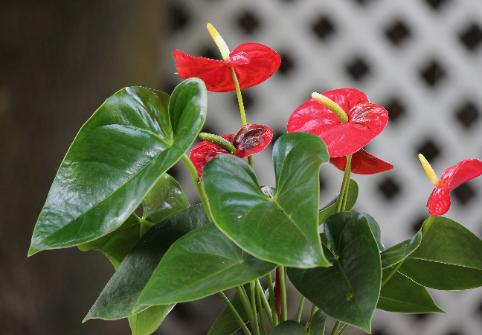
Image #5. Focal length 180mm, aperture setting F 5.6
|
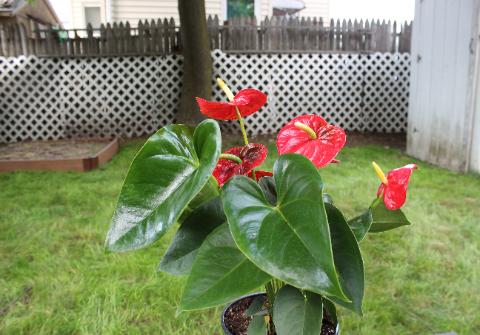
Image #6. Focal length 18mm, aperture setting F 5.6
|
When short focal lengths are used, the field of view is wider so more of the background and surrounding areas will be included in the picture. Also, the background area will appear to be further away when a short focal length is used. (see image #6)
Since the background appears further away, areas that may be out of focus are less noticeable and the depth of field will appear to be deeper than if a long focal length were used.
As you can see in image #5, a longer focal length will show a narrower field of view and the background area is magnified much more than when a short focal length is used. Longer focal lengths also compress the area in a scene making the background appear closer to the subject than it really is.
So, between the magnification and compression of the area in a scene when longer focal lengths are used, slightly out of focus areas can appear extremely out of focus. Therefore, pictures taken using a very long focal length may have very shallow depth of field.
It was previously mentioned that the depth of field in wide angle and telephoto lenses is actually pretty similar. Looking at the examples above, that does not appear to be true.
However, if you were to magnify a small portion of the background area from image #6 to the same proportion as shown in image #5, actual depth of field would show as similar.
So, would it be better to use a long focal length to intentionally create shallow depth of field? In most situations the answer would be yes. However, don't forget that the aperture setting (F Stop), lens to subject distance, as well as subject to background distance will affect how shallow the depth of field will appear.
Depth of Field and the Type of Camera Used: The basic principles of depth of field will apply no matter which type of camera is used. However, compact cameras are built with smaller lens/image sensor combinations than Digital SLR cameras.
Compact cameras use shorter focal lengths (wider angles) to duplicate a field of view similar to those of Digital Slr cameras. The wider angle focal lengths allow compact cameras to produce images with deep depth of field.
Yet, it can be a little difficult for a compact camera lens to duplicate the very shallow depth of field that can be obtained when a Digital Slr camera lens is used. That is because a 200mm focal length on a compact camera lens has a much wider field of view than a 200mm focal length lens on a Digital Slr camera.
So if the field of view is wider, the depth of field will not be as shallow. If you'd like to know more about the differences in the field of view of compact cameras compared to Digital Slr cameras, read the tutorial 35mm equivalent.
In closing, just remember that depending on the situation, different F Stops, lens to camera distances, and focal lengths may be required to obtain the type of depth of field you may want. (whether it is deep or shallow)
Practice and experimenting will definitely help you get to the point where you can say that you know how to control the depth of field in a picture. So go ahead and give it a shot!
Since the background appears further away, areas that may be out of focus are less noticeable and the depth of field will appear to be deeper than if a long focal length were used.
As you can see in image #5, a longer focal length will show a narrower field of view and the background area is magnified much more than when a short focal length is used. Longer focal lengths also compress the area in a scene making the background appear closer to the subject than it really is.
So, between the magnification and compression of the area in a scene when longer focal lengths are used, slightly out of focus areas can appear extremely out of focus. Therefore, pictures taken using a very long focal length may have very shallow depth of field.
It was previously mentioned that the depth of field in wide angle and telephoto lenses is actually pretty similar. Looking at the examples above, that does not appear to be true.
However, if you were to magnify a small portion of the background area from image #6 to the same proportion as shown in image #5, actual depth of field would show as similar.
So, would it be better to use a long focal length to intentionally create shallow depth of field? In most situations the answer would be yes. However, don't forget that the aperture setting (F Stop), lens to subject distance, as well as subject to background distance will affect how shallow the depth of field will appear.
Depth of Field and the Type of Camera Used: The basic principles of depth of field will apply no matter which type of camera is used. However, compact cameras are built with smaller lens/image sensor combinations than Digital SLR cameras.
Compact cameras use shorter focal lengths (wider angles) to duplicate a field of view similar to those of Digital Slr cameras. The wider angle focal lengths allow compact cameras to produce images with deep depth of field.
Yet, it can be a little difficult for a compact camera lens to duplicate the very shallow depth of field that can be obtained when a Digital Slr camera lens is used. That is because a 200mm focal length on a compact camera lens has a much wider field of view than a 200mm focal length lens on a Digital Slr camera.
So if the field of view is wider, the depth of field will not be as shallow. If you'd like to know more about the differences in the field of view of compact cameras compared to Digital Slr cameras, read the tutorial 35mm equivalent.
In closing, just remember that depending on the situation, different F Stops, lens to camera distances, and focal lengths may be required to obtain the type of depth of field you may want. (whether it is deep or shallow)
Practice and experimenting will definitely help you get to the point where you can say that you know how to control the depth of field in a picture. So go ahead and give it a shot!